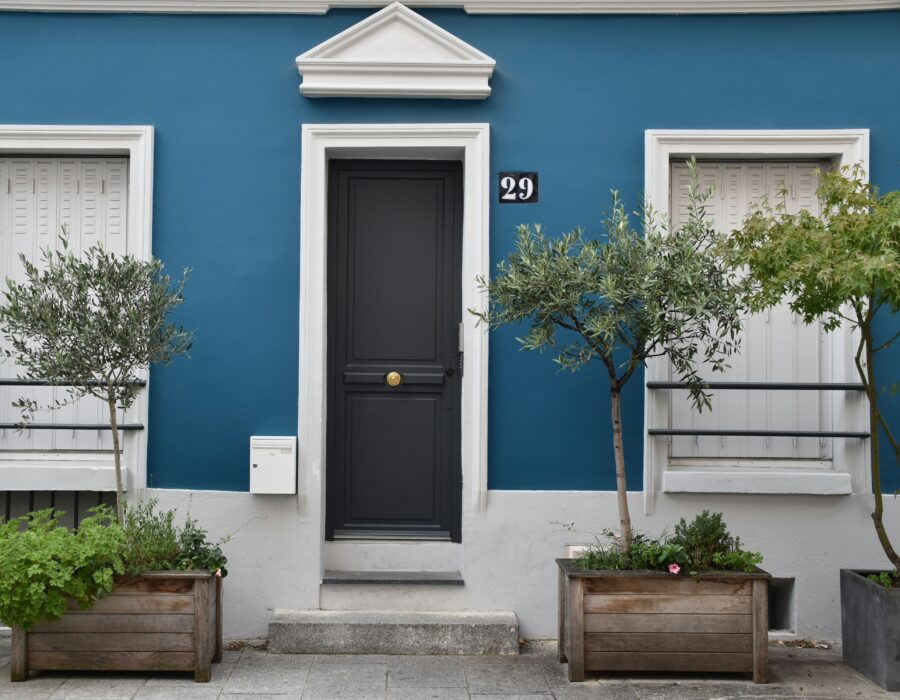
Your front door gets more attention than almost any other single exterior element. Learning how to pick a front door color that pops comes down to a handful of practical factors, not just picking whatever shade you personally love most.
Start With What’s Already There
Your door color doesn’t exist in isolation. According to Behr, looking at your home’s siding, trim, stone, brick, and even landscaping gives you a starting point for a color that feels balanced rather than random.
Your home’s overall architectural style matters too. Traditional homes often suit rich, timeless colors, while contemporary homes can carry brighter or more unexpected shades without looking out of place.
Use Contrast to Make the Door Stand Out
A door that blends into the surrounding siding rarely reads as a design choice. Contrast, whether through color or value, is what makes a door pop rather than disappear into the wall around it.
A dark door against light siding, or a bold saturated color against a neutral exterior, creates the kind of visual separation that draws the eye exactly where you want it: to the entrance.
Match Undertones, Not Just Colors
It’s not enough for a door color to simply differ from the siding. The undertones need to work together too. A door with cool undertones can clash against siding with warm undertones, even if the two colors seem compatible at first glance.
If your exterior leans warm, choosing a door color with similar warm undertones, even in a completely different hue, helps the whole facade feel cohesive rather than fighting itself.
Consider Your Home’s Natural Lighting
The light around your entryway changes how any color reads. A covered, shaded porch calls for a different approach than a door in full, direct sun.
If your entry sits in shadow most of the day, a lighter or brighter color helps it stand out against the darker surroundings. In full sun, deeper or more saturated colors can hold their impact without washing out.
Test the Color on the Actual Door
Paint chips and online color swatches rarely translate perfectly to how a color looks on your specific door, in your specific light. Tape sample swatches directly to the door and observe them at different times of day before committing.
Look at the color both up close and from the street. A color that reads one way from a few feet away can look completely different from the sidewalk or curb, which is the vantage point that actually matters most for curb appeal.
Choose the Right Sheen, Not Just Color
Color gets most of the attention, but sheen matters too. A higher gloss finish shows off carved details and architectural features on a newer or well-maintained door. A lower-luster finish is more forgiving on a door with dents, scratches, or other imperfections.
This choice affects how the color itself reads as well. Glossier finishes tend to appear slightly more saturated and vibrant than the same color in a flat or matte sheen.
Let Your Porch Decor Guide the Decision
If your porch already has color, planters, furniture, or seasonal decor, use those existing elements as a starting reference rather than choosing a door color in isolation. Coordinating the door with what’s already there creates a more intentional, pulled-together entryway.
This is a particularly useful approach if you’re not confident choosing color from scratch, since it narrows the decision to shades that already fit your existing outdoor style.
Think About Scale and Distance From the Street
A color that looks subtle up close can read as much bolder from a distance, or the reverse, depending on your home’s size and how far the entry sits from the street. A large home with an entry set back from the road can often support a bolder color than a smaller home with a door close to the sidewalk.
This is worth factoring in before finalizing a choice, since the same color can perform very differently depending on your home’s specific proportions.
Don’t Overthink Bold Choices
Front doors are one of the lowest-risk, highest-impact places to experiment with color. Unlike a full exterior repaint, a door is a small surface area and relatively inexpensive to repaint again if a bold choice doesn’t work out as expected.
This makes the front door a genuinely good place to take a slightly bigger color risk than you might elsewhere on the home’s exterior.
The Takeaway
Learning how to pick a front door color that pops means starting with your home’s existing colors and architecture, using contrast intentionally, and testing the actual shade in your real lighting before committing. A door doesn’t need to be daring to make an impact, it just needs to be considered.
Since front door color plays such a visible role in styles like modern farmhouse, reviewing your full exterior design alongside your door color choice helps ensure the entrance complements the rest of the home rather than standing apart from it.