Wall space is often the most underused storage resource in a home. A few well-planned DIY shelving ideas can add real storage without eating into floor space.
Bracket Shelves Are the Easiest Starting Point
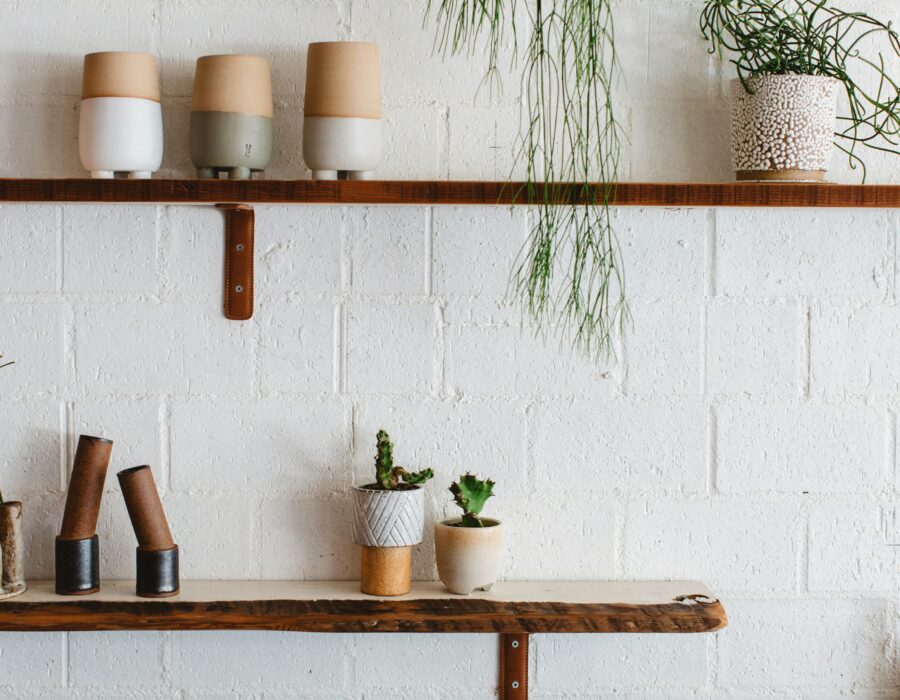
If you’re new to building shelves, bracket-supported shelves require the fewest tools and the least experience. A board attached to simple brackets creates functional storage almost anywhere, kitchens, bathrooms, offices, or entryways.
Many hardware stores will precut lumber to your specifications, which simplifies the project even further. Add paint or stain in a color of your choice, and the shelf blends seamlessly with your existing decor.
Floating Shelves Offer a Cleaner Look
Floating shelves conceal their support hardware, creating the appearance of a shelf attached to the wall with no visible means of support. According to Family Handyman, these shelves work well in kitchens, living rooms, and basements alike, wherever you want storage without a bulky bracket system.
A hidden steel bracket anchors into the wall studs, and the shelf itself slides over the bracket’s rods, covering them completely once installed.
Always Anchor Into Studs for Weight-Bearing Shelves
Any shelf meant to hold real weight, books, dishes, tools, needs to be anchored into wall studs, not just drywall alone. Drywall anchors work for lightweight decorative items, but they can’t support the weight of a fully loaded shelf over time.
Use a stud finder before installation to locate secure anchor points. This single step prevents the most common cause of a shelf eventually pulling away from the wall.
Match Shelf Depth and Thickness to Their Purpose
A thin shelf, built from narrower support material, works well for display items or lightweight decor. A deeper, thicker shelf suits actual storage needs, cookbooks, bins, or heavier kitchen items.
Planning this before you start building prevents the frustration of finishing a beautiful shelf that turns out too shallow or too flimsy for what you actually intended to store on it.
Customize Length for Spaces Store-Bought Shelves Don’t Fit
One of the biggest advantages of DIY shelving is sizing it exactly to your space. A custom 70-inch kitchen shelf, or a shelf that spans an awkward nook, is something you simply can’t buy off the shelf in most stores.
This customization is especially valuable in older homes or oddly shaped rooms, where standard shelf sizes rarely fit cleanly.
Use Vertical Corners for Underused Space
Corners are frequently wasted space in most rooms. A floating shelf built specifically to fit a corner adds functional storage while making use of an area that would otherwise sit empty.
This works particularly well in living rooms or reading nooks, where a corner shelf can display books or decor without disrupting the room’s overall furniture layout.
Disguise Traditional Brackets for a Similar Look
If a true floating shelf feels too advanced for a first project, you can achieve a similar visual effect with traditional supported shelves by disguising the brackets. This gives you the sturdiness of standard bracket support with a cleaner overall appearance.
This approach is more forgiving for beginners, since it doesn’t require the precision that true floating shelf installation demands.
Build Shelving Between Studs for Recessed Storage
If you want storage that doesn’t protrude into the room at all, building shelves directly between wall studs creates a recessed storage niche. This works particularly well in bathrooms, hallways, or narrow spaces where even a few inches of protruding shelf feels tight.
This project requires opening the wall between studs, so it’s a more involved undertaking than a standard mounted shelf, but the result is storage that feels built-in rather than added on.
Consider Heavy-Duty Systems for Garage and Utility Spaces
Display shelving in living spaces prioritizes appearance, but garage and utility storage needs to prioritize load capacity instead. Stud-anchored steel shelving systems designed for heavier loads, tools, bins, equipment, hold up far better in these spaces than standard wood shelving built for lighter display use.
These systems often allow reconfiguration without drilling new holes, which adds flexibility as your storage needs change over time.
Finish Shelves to Match Your Existing Decor
A shelf’s material and finish matter as much as its function. Painted white shelves suit a clean, modern look. Natural or stained wood fits more traditional or farmhouse-style spaces.
Taking the time to match your shelving to the room’s existing style prevents even well-built shelves from looking like an obvious afterthought.
The Takeaway
Good DIY shelving ideas turn underused wall space into real, functional storage. Whether you start with simple bracket shelves or work up to a true floating shelf system, matching the shelf’s depth, anchoring, and finish to its actual purpose makes the project both sturdy and visually intentional.
Once your shelving is in place, applying the same zone-based thinking to your existing cabinets helps create a home where every storage space, new and old, works together efficiently.