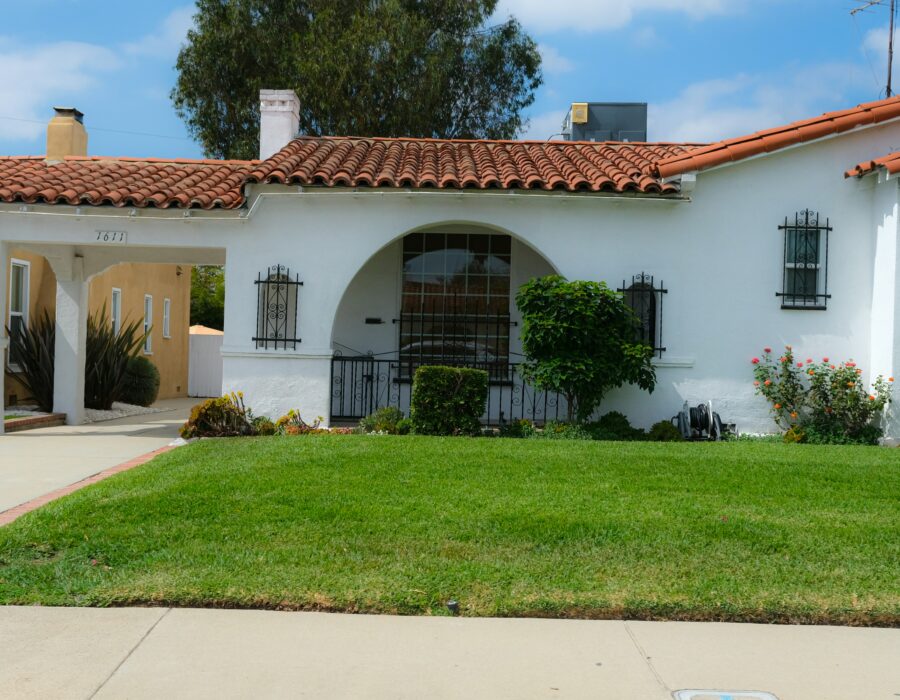
A hot, dry climate doesn’t mean your front yard has to look barren. It just means working with the conditions instead of against them. Good front yard landscaping for hot climates starts with rethinking a few defaults, especially the lawn.
Why Traditional Lawns Struggle in Heat
Lawns are the biggest water consumer in most yards. In hot, dry regions, they can account for the majority of a property’s irrigation use, sometimes far more than any other single feature.
This isn’t a maintenance failure. It’s simply what grass needs to survive in climates it wasn’t built for. Reducing lawn size, or replacing it entirely, is often the single biggest change you can make.
Start With Drought-Tolerant Plants
Not every plant struggles in the heat. Drought-tolerant species are built to handle exactly these conditions, needing far less water once established than traditional lawn or garden plants.
According to Colorado State University Extension, well-adapted shrubs and groundcovers can define borders and add privacy while staying low-maintenance and resilient to local conditions.
Identify Where Heat Actually Concentrates
Not every part of your yard experiences the same heat. Areas near driveways, sidewalks, and south- or west-facing walls often trap and reflect extra heat, making them harder on plants than the rest of the yard.
Once you know where these hot spots are, you can choose the most heat-tolerant plants specifically for those zones, rather than guessing and losing plants to conditions they were never suited for.
Use Trees and Shrubs to Create Shade
Shade doesn’t just help people, it helps the whole yard run cooler. Trees placed strategically near south-facing walls can shield your home from the most intense afternoon sun.
Tall shrubs or vines grown against exterior walls do something similar. Walls absorb heat and radiate it back out, so a layer of greenery in front of that surface helps reduce how much heat reaches the plants and hardscape nearby.
Rethink Materials, Not Just Plants
Heat radiates off more than plants. Landscape rock and gravel can hold and release significant heat, especially near driveways and walkways.
Groundcovers help offset this in high-traffic zones. Organic materials, like mulch or wood chips, also absorb less heat than plastic or steel landscaping elements, which keeps the surrounding soil and plants noticeably cooler.
Group Plants by Water Need
One common mistake is scattering plants with different water requirements throughout the yard. This makes efficient watering nearly impossible, since thirsty plants and drought-tolerant ones end up competing for the same irrigation schedule.
Instead, group plants together based on how much water they actually need. This lets you water each zone appropriately, rather than overwatering the tough plants just to keep the thirsty ones alive.
Water Early in the Day
Timing matters as much as plant choice. Watering in the early morning, while temperatures are still relatively low, gives water time to soak in before the heat of the day causes rapid evaporation.
This single habit change can noticeably reduce how much water your landscaping actually needs, without changing a single plant.
Consider a Focal Point Instead of Filling Every Space
A hot-climate yard doesn’t need to be densely planted to look intentional. A single striking element, a sculptural drought-tolerant tree, a decorative boulder, or a dry riverbed feature, can anchor the whole design.
This approach also reduces overall water use, since you’re not trying to fill every square foot with thirsty greenery.
Don’t Overhaul Everything at Once
Converting an entire yard to drought-tolerant landscaping in one go can feel overwhelming, and it’s not necessary. Gradual changes, starting with the highest water-use areas like a struggling lawn section, let you build resilience over time without a complete redesign.
This also gives you room to see what actually thrives in your specific yard before committing to a full landscape plan.
The Takeaway
Good front yard landscaping for hot climates comes down to matching plants to real conditions: less lawn, more drought-tolerant species, and materials that don’t trap unnecessary heat. None of this requires sacrificing curb appeal, it just means designing with your climate instead of despite it.
Since exterior paint also has to survive that same sun exposure, choosing fade-resistant colors for your home’s facade is worth tackling alongside your landscaping plans, not as a separate project.