Outdoor lighting has to survive conditions indoor fixtures never face: rain, humidity, dust, and constant temperature swings. Knowing how to choose outdoor lighting fixtures starts with understanding one number most people skip right past: the IP rating.
What an IP Rating Actually Means
IP stands for Ingress Protection. It’s a two-digit code that tells you how well a fixture resists solid objects and water. According to Louis Poulsen, the first digit measures resistance to dust and debris, while the second measures resistance to moisture.
Higher numbers mean better protection. A fixture rated IP20 is fine indoors but will fail quickly outside. A fixture rated IP65 or higher is built to handle real outdoor exposure.
Match the Rating to the Actual Location
Not every outdoor spot faces the same conditions. A covered porch or patio gets some protection from rain and wind, so a lower rating, around IP44 to IP54, is often enough there.
Fully exposed areas, wall lights, garden spotlights, and pathway markers, take direct rain and occasional hose spray. These locations need IP65 as a practical minimum, since anything lower risks water getting inside the fixture over time.
Don’t Automatically Choose the Highest Rating
It’s tempting to assume more protection is always better. But higher IP ratings cost more, and a fixture rated far beyond what its location actually needs is simply an unnecessary expense.
An IP67 or IP68 rating makes sense for something like an underwater pool light. For a standard wall sconce or path light, that level of protection adds cost without meaningful benefit.
Consider Your Climate, Not Just the Fixture Type
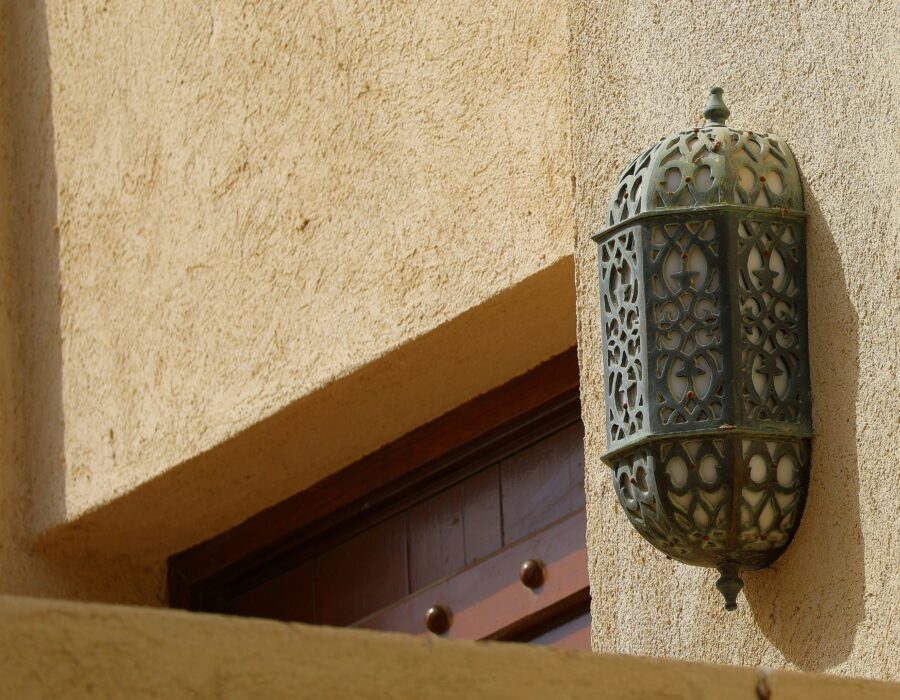
Location matters as much as fixture type. Homes near the coast face salt air that accelerates corrosion, so a slightly higher IP rating, or corrosion-resistant materials, is worth the extra cost even for moderately sheltered spots.
In drier, inland climates, standard outdoor-rated fixtures generally hold up fine without needing that extra margin of protection.
Choose Materials That Resist Corrosion
IP rating protects against water and dust getting inside a fixture, but the fixture’s outer material matters too. Brass, stainless steel, and powder-coated aluminum all hold up well outdoors, resisting rust and corrosion far longer than untreated metals.
This becomes especially important in humid or coastal climates, where lower-quality materials can visibly degrade within just a year or two of installation.
Think About Fixture Scale Before Style
It’s easy to fall in love with a fixture’s design before considering whether it actually fits the space. A fixture that’s too small for a large entryway disappears visually, while an oversized fixture on a modest doorway can look out of proportion.
Measure your installation area and consider the scale of nearby architectural elements, the door height, the width of a porch, before finalizing a specific style.
Match Finishes to Your Existing Exterior Hardware
Small details add up in outdoor spaces. A lighting fixture finish that matches, or intentionally complements, your door hardware, house numbers, or mailbox creates a more cohesive look than mismatched finishes scattered across the exterior.
This is an easy detail to overlook when shopping for a single fixture in isolation, but it makes a noticeable difference once everything is installed together.
Consider Maintenance Access Before Installing
Some fixture locations are easy to reach for bulb changes and cleaning. Others, mounted high on a facade or in a hard-to-reach corner, are far more inconvenient.
Where possible, choose long-lasting LED fixtures for harder-to-reach locations, since this reduces how often you’ll need to deal with an inconvenient maintenance situation.
Don’t Skip Proper Installation
Even a well-chosen, appropriately rated fixture can fail prematurely if installed incorrectly. Gaps in sealing, improperly sealed cable entry points, or incorrect mounting can let moisture in regardless of the fixture’s official rating.
If you’re not confident in electrical work, this is one area worth hiring a professional for, since a failed seal effectively negates the protection the IP rating was supposed to provide.
The Takeaway
Learning how to choose outdoor lighting fixtures comes down to matching the IP rating to the actual exposure of each location, choosing corrosion-resistant materials, and installing fixtures properly so their rated protection actually holds up. None of this requires overspending on the highest-rated fixture available for every spot.
Since fixture choice and placement work together with your broader lighting design, planning how to light your home’s facade alongside these fixture decisions helps the whole exterior lighting scheme come together as one cohesive plan.