An unused balcony is wasted square footage. With a few intentional choices, even a tiny footprint can become a real sitting area you actually use. Learning how to turn a balcony into a sitting area comes down to scale, comfort, and a few smart shortcuts for small spaces.
Measure Before You Choose Any Furniture
Balcony dimensions vary enormously, and furniture that looks fine in a photo can completely overwhelm a small footprint. Measure your balcony’s width and depth before shopping, and account for the door swing and any walking space you’ll need.
According to Homes & Gardens, a sprawling or circular furniture design occupies far more floor space than pieces with neat, straight sides, so shape matters just as much as overall footprint.
Choose Lightweight, Multi-Purpose Furniture
In a small balcony, every piece needs to earn its place. Foldable chairs, stackable stools, or a small bench that also offers storage all work harder than a single-purpose piece.
Poufs and stools are particularly useful here, since they can serve as extra seating, a side table, or a footrest depending on the moment, without needing separate furniture for each function.
Consider Open-Weave Designs
Furniture with open, airy construction, like woven or rattan pieces, helps a small balcony feel less closed in. Since your line of sight isn’t blocked by solid material, the space reads as larger than its actual dimensions.
This matters more on a balcony than almost anywhere else, since there’s rarely room to simply add more open space. Choosing furniture that doesn’t visually block sightlines becomes the next best option.
Anchor the Space With a Rug
A single well-chosen rug does a lot of work in a small balcony. It defines the sitting area, adds warmth underfoot, and helps the space feel like an intentional room rather than a leftover outdoor corner.
Make sure any rug used outdoors is rated for outdoor conditions, since standard indoor rugs won’t hold up to rain, humidity, or direct sun exposure.
Use the Railing for Extra Storage and Greenery
Floor space is often the most limited resource on a balcony, but railings are usually underused. Flower boxes or planters attached directly to the railing free up valuable floor area for seating instead of plant pots.
This also adds greenery at eye level, which does more for the overall atmosphere than the same plants placed on the floor where they’re less visible while seated.
Add Lighting for Evening Use
A balcony that only works during the day is missing half its potential. String lights, small lanterns, or a single well-placed sconce extend usability into the evening without requiring any major electrical work.
Warm-toned lighting works best here, matching the same cozy, relaxed feel you’d want from any small outdoor sitting area.
Consider a Floor Cushion Setup for Very Tight Spaces
If your balcony is genuinely too small for chairs, floor cushions or a low mattress-style seating arrangement can still create a real sitting area. Cover them with waterproof fabric or a protective layer to handle outdoor conditions.
This option isn’t for everyone, particularly if kneeling or getting up from floor level is uncomfortable, but it works well for genuinely tiny footprints where furniture legs simply don’t fit.
Add Privacy Without Blocking Light
If your balcony faces a neighbor or a busy street, a lightweight privacy screen or bamboo covering can help without making the space feel enclosed. These options let in air and light while softening direct sightlines from outside.
This is worth considering even on balconies where privacy wasn’t previously a priority, since it often makes people more likely to actually use the space regularly.
Define the Balcony’s Purpose First
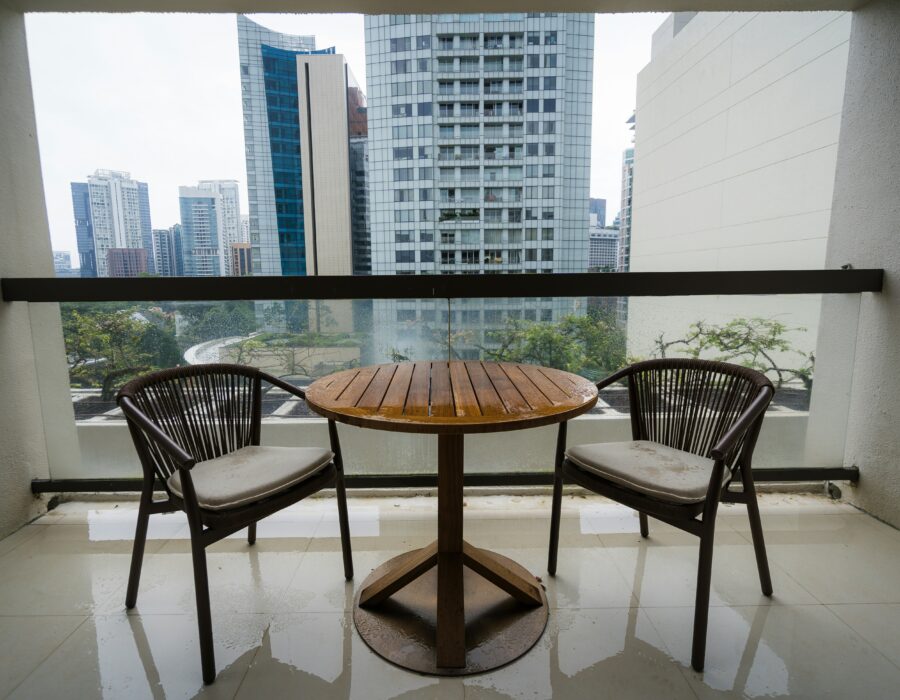
Before choosing furniture, decide what you actually want the balcony for. A small café-style table suits morning coffee or a quick meal. A single lounge chair or daybed setup suits reading or relaxing.
Trying to fit both purposes into a genuinely small balcony usually means neither works well. Picking one clear purpose leads to a more comfortable, better-used space than trying to accommodate everything at once.
The Takeaway
Learning how to turn a balcony into a sitting area comes down to measuring carefully, choosing lightweight and multi-purpose furniture, and using vertical space like railings for storage and greenery. None of this requires a large balcony, just a clear plan for the one you have.
Once your balcony is set up, small porch styling tricks apply just as well here, since both spaces benefit from the same budget-friendly approach to lighting, plants, and layered textures.