A beautiful garden doesn’t have to eat up every free weekend. With the right choices upfront, a yard can look great with far less ongoing work. These low-maintenance garden ideas focus on planning and plant selection that pays off in reduced effort for years to come.
Planning Saves More Time Than Any Single Product
It’s tempting to jump straight to buying plants or products, but planning first makes the biggest long-term difference. According to a Clemson Cooperative Extension guide, extra time spent studying your site’s sun, shade, and drainage patterns pays off many times over in later free time.
Before planting anything, walk your yard and note which areas get full sun, partial shade, and consistent moisture. This upfront observation prevents the common mistake of planting something in the wrong spot and fighting to keep it alive.
Choose Native Plants First
Native plants are naturally adapted to your local climate, soil, and typical pest pressure. This means they generally need less water, less fertilizer, and less ongoing intervention than non-native alternatives.
They’re also more forgiving of an inconsistent watering schedule, which matters most for anyone without the time for daily garden checks.
Limit Your Plant Variety
A garden with dozens of different plant species requires tracking dozens of different care schedules. Sticking to two or three core plant types dramatically simplifies maintenance, since you’re only learning and repeating a handful of care routines.
This also creates a more cohesive, intentional look. A garden with fewer, repeated plant types often reads as more designed than one packed with variety.
Mulch Everything You Can
Mulch is one of the most effective low-effort tools available. A two to three inch layer suppresses weeds, retains soil moisture, and slowly improves soil quality as it breaks down over time.
Organic options like shredded bark or pine straw work well for most garden beds. Applying mulch once or twice a year is a small time investment that meaningfully reduces weeding and watering throughout the rest of the season.
Replace High-Maintenance Lawn With Hardscaping
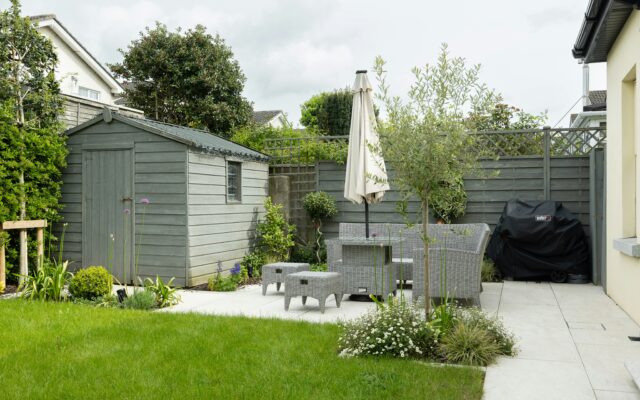
Lawns are consistently one of the most time-consuming parts of any yard. Patios, gravel paths, and paver walkways eliminate mowing entirely in the areas they cover, while still adding visual structure and function.
This doesn’t mean removing your entire lawn. Even converting a portion, particularly awkward corners or slopes that are hard to mow, reduces total yard work without sacrificing the whole green space.
Automate Your Watering
Watering by hand is one of the most repetitive, time-consuming garden tasks. Drip irrigation or soaker hoses deliver water directly to plant roots, reducing both water waste and the time you spend standing outside with a hose.
Smart timers take this a step further, watering automatically at the most effective time of day, usually early morning, without requiring you to remember or be present.
Choose Evergreens for Year-Round Structure
Evergreens provide consistent greenery without the seasonal replanting that annuals require. Once established, many evergreen varieties need very little pruning or watering, making them a reliable backbone for a low-maintenance layout.
Placing them strategically, along a fence line or as a backdrop for lower plantings, gives the whole garden structure that holds up across every season.
Group Plants by Water Needs
Scattering plants with different water requirements throughout a garden makes efficient watering nearly impossible. Grouping plants by their actual water needs lets you water each zone appropriately, rather than overwatering drought-tolerant plants just to keep thirstier ones alive.
This single organizational choice can meaningfully reduce both water use and the time spent managing an inconsistent watering routine.
Keep Garden Bed Edges Simple
Complex, curved bed edges look appealing in design photos but create more edging and trimming work over time. Simple, straight lines are faster to maintain and still look clean and intentional.
This is a small design decision, but it compounds every time you mow or edge the yard, saving real time across a full season.
The Takeaway
Good low-maintenance garden ideas start with planning, not products: choosing native plants, limiting variety, mulching consistently, and automating what you can. None of these changes require sacrificing a beautiful yard, they simply shift the effort from ongoing maintenance to smart upfront decisions.
If you’re in a particularly hot or dry climate, pairing these habits with drought-tolerant landscaping choices reduces your workload even further, since heat and water use are often the two biggest ongoing challenges busy homeowners face.