A sofa is usually the biggest single piece of furniture in a small apartment. Get the size wrong, and it can dominate the entire room. Knowing how to choose a sofa for a small apartment comes down to a handful of practical measurements, not just style.
Measure Before You Fall in Love With Anything
It’s tempting to shop by photo first. But measuring your space should always come first. According to Wayfair, a sofa under 75 inches wide generally suits a small living room best.
Measure the wall where the sofa will sit. Then measure your doorways and hallways too. A sofa that fits the room perfectly is useless if it can’t actually get through your front door.
Leave Room to Walk
Even the right-sized sofa can feel wrong if it blocks movement. Aim for at least 30 inches of walking space in front of the sofa. This keeps the natural flow of the room intact.
Between the sofa and coffee table, 14 to 18 inches usually works well. Any tighter, and the space starts to feel congested rather than cozy.
Consider a Loveseat Instead of a Full Sofa
A loveseat typically ranges from 48 to 72 inches long, noticeably smaller than a standard three-seater. This makes it a strong option for small apartments, studios, or rooms that also need to fit a desk or dining table.
You lose some seating capacity. But you gain real floor space, which often matters more in a genuinely small room.
Look for Slim Arms and Exposed Legs
Two design details make a big visual difference in a small space. First, thin, minimalist arms keep the overall width compact without sacrificing seat depth.
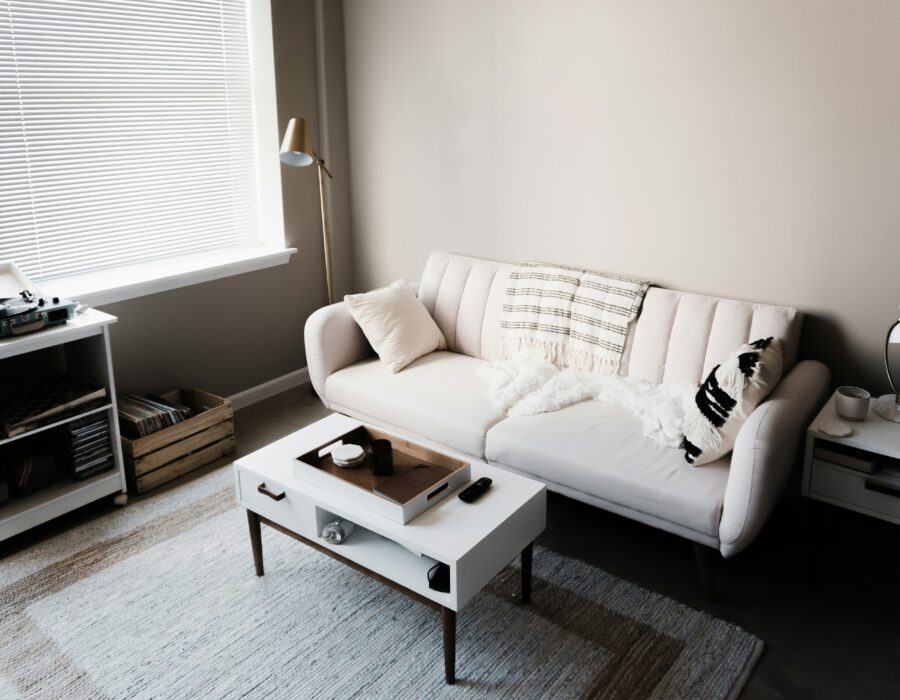
Second, a sofa raised on exposed legs feels lighter than one with a solid base. Light passes underneath, which keeps the piece from looking like it’s sitting heavily on the floor.
Choose Depth Carefully
Seat depth affects both comfort and how much floor space a sofa takes up. Standard seat depth runs between 21 and 24 inches. Deeper seats, around 26 to 28 inches, offer a more lounge-like feel but take up noticeably more room.
In a small apartment, standard depth is usually the safer choice. It still feels comfortable without eating into walking space you can’t spare.
Sectionals Aren’t Always Off the Table
Sectionals typically run from 94 to 156 inches wide, which sounds far too large for a small space. But modular sectionals change the math. Since they’re built from separate connectable pieces, you can configure a smaller footprint than a fixed-size sectional allows.
This flexibility also matters if you move often. A modular setup can be reconfigured to fit a completely different room layout later.
Use the Two-Thirds Rule as a Starting Point
A commonly used guideline suggests sizing your sofa to about two-thirds the width of the wall behind it. In a small apartment, you can go even shorter, closer to half the wall, to leave room for a side table or extra walking space.
If you’re unsure, mark the sofa’s footprint on the floor with painter’s tape before buying. Living with that outline for a day or two tells you more than any measurement on a spec sheet.
Fabric Matters More Than People Expect
In a small apartment, your sofa gets used constantly, often as the main seating, workspace, and occasional guest bed all in one. Performance fabric or tightly woven materials hold up better under that kind of daily use.
They’re also easier to clean, which matters if pets or kids share the space. A beautiful fabric that shows every mark isn’t practical in a room with limited furniture to spread the wear across.
Don’t Undersize Out of Habit
It’s common to assume “small apartment” automatically means “smallest sofa possible.” But going too small can backfire. Many people end up wishing they’d bought one more seat once real life, guests, movie nights, lazy Sundays, actually happens on the sofa.
The goal isn’t the smallest sofa that fits. It’s the largest sofa that still respects your walkways and doorway clearances.
The Takeaway
Choosing a sofa for a small apartment comes down to measuring first, respecting walkway clearances, and favoring slim, light-feeling designs over bulky ones. A loveseat or modular sectional often solves the space problem better than simply buying a smaller version of a standard sofa.
Once your sofa is chosen, arranging the rest of the room around it becomes much easier, since the sofa’s size and placement set the foundation for everything else in the space.