A small bedroom doesn’t have to work against you. In fact, once you get the layout right, a smaller room can actually make it easier to relax, since there’s simply less visual clutter competing for your attention. Getting a solid small bedroom layout for better sleep comes down to a handful of decisions, not a full renovation.
Start With Bed Placement, Not Decor
The bed is the single largest object in the room, so it should be the first thing you plan, not the last. Most sleep experts recommend positioning the bed so you can see the door without being directly in line with it. This isn’t just a design preference. According to Sleep Foundation, a calm, ordered bedroom environment plays a real role in falling asleep and staying asleep.
In a small room, this often means placing the headboard against the longest wall, away from the door’s direct sightline. If the room is too small for that exact setup, angling the bed slightly still helps more than pushing it into a tight corner.
Leave Space on Both Sides, Even If It’s Small
It’s tempting to shove a small bed against a wall to save floor space. But leaving even 12 to 18 inches on each side makes the bed easier to get in and out of, and it keeps the room from feeling like a hallway with a mattress in it.
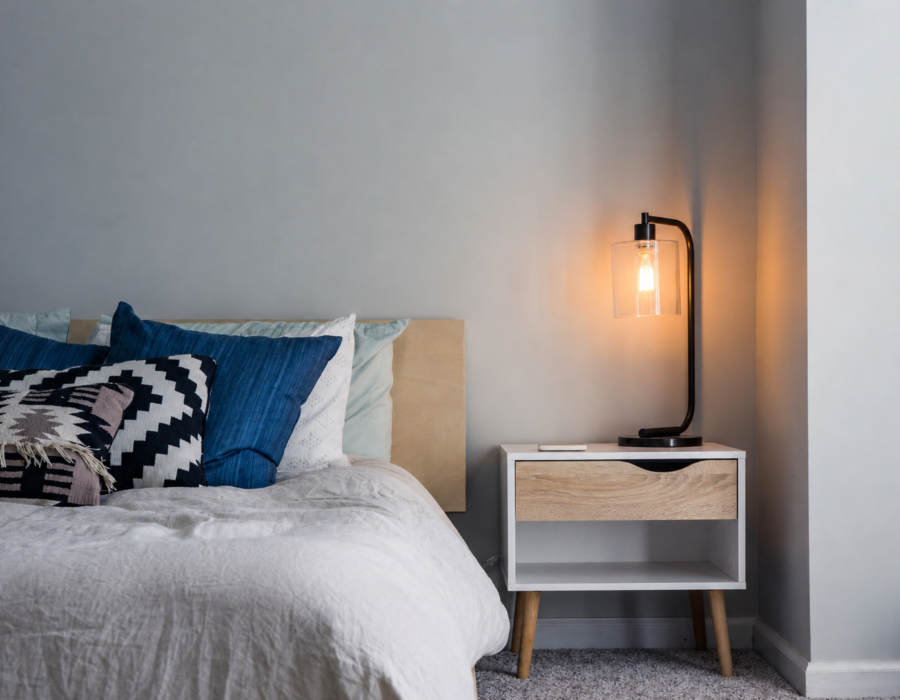
If your room truly can’t fit two full nightstands, use one, and pair it with a small wall-mounted shelf on the other side. You still get a spot for a lamp and a glass of water without eating up floor space.
Choose Furniture That Doesn’t Block Movement
In a small bedroom, every extra piece of furniture has a cost. Before adding a dresser, chair, or bench, ask whether it blocks the main path between the bed and the door.
A cramped, obstacle-filled walk to bed doesn’t sound like a big deal, but it adds a small amount of friction every single night. Over time, that friction makes the room feel more stressful than restful.
Keep the Space Under and Around the Bed Clear
An underbed storage box or two is fine, but avoid letting the space under the bed become a catch-all. A cluttered under-bed area doesn’t just look messy, it can make the whole room feel heavier and less settled, even if you can’t see it while lying down.
The same goes for the floor around the bed. A small bedroom with a clear floor reads as calm. The same room with clothes and boxes scattered around reads as chaotic, regardless of how nice the furniture actually is.
Use Vertical Space Instead of Floor Space
When floor space is limited, the walls become your best resource. Wall-mounted shelves, hooks, and even a slim wall-mounted lamp free up surface area on nightstands and dressers.
A tall, narrow dresser takes up less floor space than a wide, short one while holding the same amount, which matters more in a small room than it seems like it should.
Choose a Bed Size That Actually Fits
It’s common to want the biggest bed a room can technically hold. But in a small bedroom, sizing down slightly, going from a queen to a full, for example, can free up enough space to make the whole room breathe better.
A bed that fills 80% of the floor space will always feel cramped, no matter how good the rest of the layout is. A slightly smaller bed with proper clearance around it almost always feels more comfortable to actually sleep in.
Keep the Color Palette Calm and Consistent
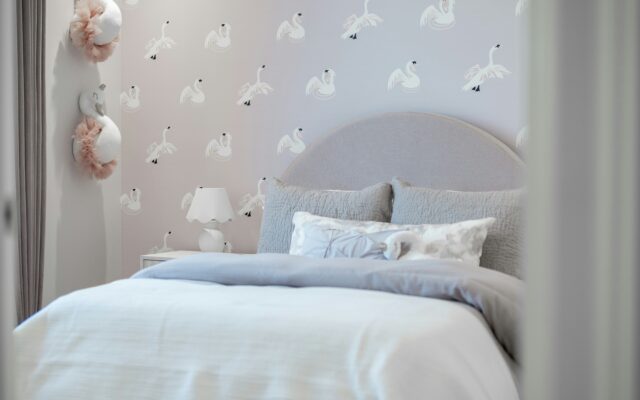
Layout matters most, but color plays a supporting role. Busy patterns and high-contrast colors can make a small room feel more chaotic, which works against the goal of a restful space.
Soft, muted tones on the walls and bedding help the room feel larger and calmer at the same time. This doesn’t mean the room has to be boring, just consistent enough that nothing fights for attention right before bed.

Keep Electronics Out of Sight, If Not Out of the Room
A small bedroom often doubles as extra storage for chargers, cables, and screens simply because there’s nowhere else to put them. Where possible, tuck these into a drawer or behind a small tray rather than leaving them visible near the bed.
This isn’t just about tidiness. A visually calm space right before sleep genuinely helps some people wind down faster, even if the effect is subtle.
The Takeaway
A good small bedroom layout for better sleep starts with bed placement, then works outward: clear pathways, controlled clutter, and a calm color palette. None of these changes require more space, just more intention with the space you already have.
Once the bedroom layout feels right, arranging furniture with the same principles works just as well in your living room, since scale and clear sightlines matter in every room, not just the one you sleep in.