Curtains can make or break a room, and the difference usually comes down to two things: length and fullness. Get curtain length and fullness right, and a window looks finished and intentional. Get it wrong, and even beautiful fabric looks skimpy or awkward.
Why Length Matters More Than People Think
The biggest curtain mistake isn’t the fabric choice, it’s hanging panels that are too short. Curtains that stop several inches above the floor, unless done deliberately, tend to look unfinished rather than casual.
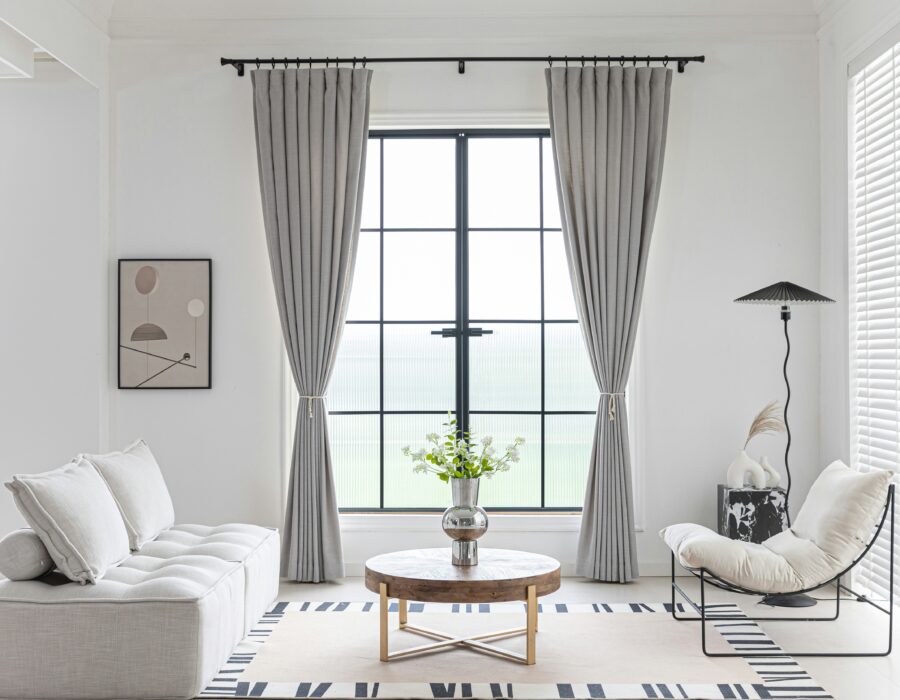
The most common and versatile length is floor-length, where panels reach the floor with about half an inch of fabric resting on it. This creates a soft break, similar to how dress trousers break at the shoe. It works in nearly any room and reads as intentional without feeling overly formal.
The Three Main Length Styles
Sill-length curtains stop right at the windowsill. This works well in kitchens or bathrooms, where longer fabric can get in the way near a sink or stove.
Apron-length panels fall a few inches below the sill, landing in the space between the sill and the floor. This style feels slightly more casual and suits cottage or farmhouse interiors, though it’s less common in contemporary spaces.
Floor-length is the default choice for living rooms, bedrooms, and dining rooms. If your room doesn’t have an obvious reason to choose otherwise, this is the safest and most flattering option.
How to Measure for the Right Length
Start by measuring from the top of your curtain rod down to where you want the fabric to end. For floor-length curtains, measure straight to the floor and add about half an inch.
One detail matters more than most people realize: all panels in the same room need to hang at the same length. Even a small difference, a quarter inch or so, becomes visible once curtains are actually hung side by side.
What Fullness Actually Means
Fullness refers to how much extra fabric your curtains have beyond the width of the window itself. Without it, curtains hang flat against the window, more like a stiff panel than soft drapery.
According to HGTV, properly sized curtains do more than just cover a window, they visually expand a room and give it a sense of depth that flat, undersized panels simply can’t match.
Picking the Right Fullness Ratio
Most residential curtains look best at 1.5 to 2 times the width of the rod. This creates soft, natural folds without looking overdone.
At 1x width, curtains hang nearly flat, which suits a minimal or purely functional look but rarely looks finished on its own. At 2.5 to 3x width, curtains create deep, hotel-style pleats, which can look luxurious but may be more fabric, and more cost, than most rooms need.
For most homes, aiming for 2x the rod width is a safe, reliable starting point.
Don’t Match the Rod to the Window
A common mistake is buying a curtain rod that’s exactly as wide as the window frame. When curtains open, they end up covering part of the window itself, which makes the room look smaller instead of bigger.
Instead, extend the rod at least 4 to 10 inches beyond each side of the window frame. This lets open curtains stack against the wall rather than the glass, so the window appears larger and lets in more light.
Where to Mount the Rod
Height matters just as much as width. Mounting the rod too close to the window frame is one of the most common curtain mistakes, and it makes ceilings look shorter than they are.
As a general rule, mount the rod at least 4 to 6 inches above the window frame. In rooms with higher ceilings, moving the rod closer to the ceiling line, rather than the window, makes the whole wall feel taller.
Matching Fullness to Fabric Weight
Lightweight fabrics like sheers can handle slightly less fullness and still look soft, since the material naturally drapes well. Heavier fabrics, like blackout or velvet curtains, often need a bit more fullness to avoid looking stiff or boxy when closed.
If you’re unsure, err toward more fullness rather than less. Flat curtains are far more noticeable, and harder to fix after the fact, than slightly excessive folds.
The Takeaway
Getting curtain length and fullness right comes down to a few repeatable rules: floor-length in most rooms, 1.5 to 2x fullness, and a rod mounted wider and higher than the window itself.
Since curtains control how much daylight actually reaches a room, this pairs closely with choosing the right wall color for the light you have, since both work together to shape how bright or cozy a space ultimately feels.