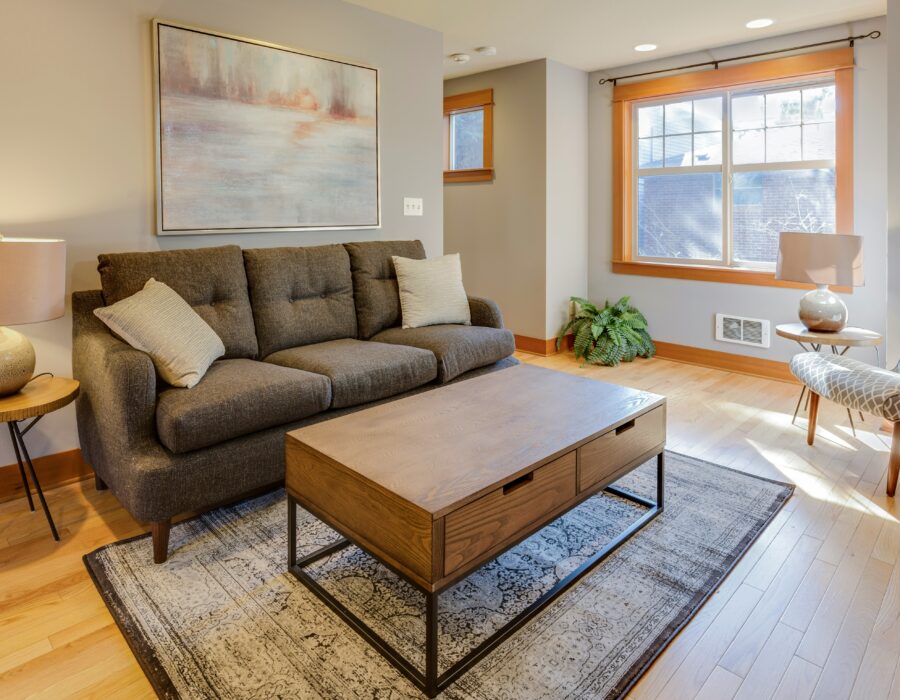
A rug can pull a living room together. Or it can make the whole space look disjointed. The difference almost always comes down to size.
This rug sizing guide walks through what size rug for your living room actually works. It’s based on your furniture and room dimensions, not just style.
Why Rug Size Matters More Than Style
It’s easy to fall for a pattern or color first. But the most common rug mistake isn’t style. It’s picking something too small.
According to Chairish, an undersized rug is the top reason a well-furnished room still looks off. A too-small rug creates a “floating” effect. It sits disconnected from the furniture instead of anchoring it.
The Standard Sizes You’ll See While Shopping
Most rugs come in a few common sizes. These are 5×7, 6×9, 8×10, and 9×12 feet. Larger rooms sometimes need 10×14.
A 5×7 rug rarely works in a full living room. It’s better for a small nook or entryway. If your room is average size or bigger, start at 6×9.
Match Rug Size to Room Size
Here’s a simple starting point. An 8×10 rug fits an 11×13 room, or slightly larger. A 9×12 rug suits a 12×18 space, or an open floor plan.
For smaller rooms, a 6×9 rug works well in 11×13 or below. Leave about 18 to 24 inches of bare floor around the rug’s edge. Too little, and the room feels cramped. Too much, and the rug looks undersized.
The Furniture Rule That Matters Most
Room size is a good starting point. But furniture placement decides the real answer.
Here’s the rule: get the front legs of your sofa and chairs onto the rug. For an even more finished look, aim for all four legs on every seat. This works especially well in bigger rooms.
What Happens When Sizing Goes Wrong
Too small, and furniture looks like it’s hovering at the edges. Too large, and the rug can swallow the room instead of opening it up.
Neither mistake is permanent. But both are easy to avoid once you know the signs.
How to Measure Before You Shop
Start with furniture, not the empty floor. Arrange your seating the way you actually want it. Then measure from one outer edge to the other.
Add 18 to 24 inches on each side for the rug to extend outward. Prefer working from room size instead? Measure the room’s length and width. Then subtract 36 to 48 inches total for a rough max rug size.
Rug Size for Smaller Living Rooms
A 5×7 rug can still work in a small room. Place it under a coffee table, or in front of a fireplace with two chairs mostly on top of it.
The key is being intentional. Pick one zone for the rug to anchor, rather than trying to cover the whole floor.
Rug Size for Larger or Open-Plan Rooms
In bigger spaces, undersizing is the bigger risk. A 9×12 rug is often the minimum for a larger living room. Anything smaller can look lost in the open space.
Got multiple seating areas, or an open floor plan? Consider a 10×14 rug. Or use two separate rugs, one per zone, instead of stretching one rug too thin.
The Takeaway
Two things decide the right rug sizing guide answer for your room. First, match the rug to your room’s dimensions. Second, get at least the front legs of your furniture onto it.
Still unsure? Size up, not down. An undersized rug is far more noticeable than a slightly generous one.
Once your rug is sized right, arranging the rest of your furniture around it gets much easier. The rug basically becomes the map for everything else.


