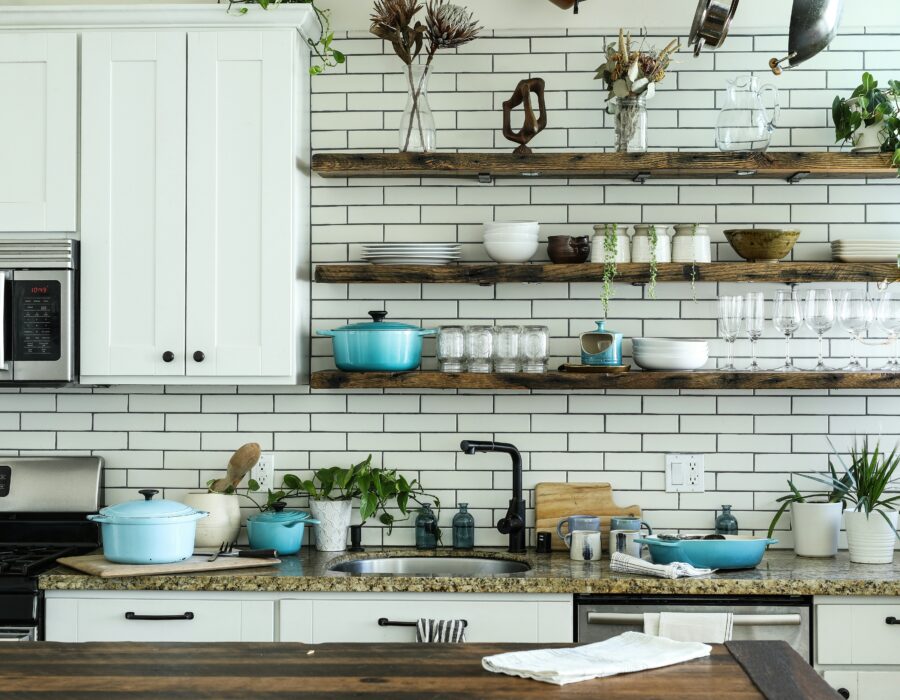
Open shelving looks stunning in photos. But in real life, it can turn messy fast. Learning how to style open shelving in a kitchen comes down to a few repeatable rules, not just good taste.
Why Open Shelves Are Harder Than Cabinets
Cabinets hide clutter. Open shelves don’t. Every plate, mug, and bowl is on display, all the time.
This means bad organization shows immediately. A single mismatched item can throw off the whole look. So styling here isn’t optional. It’s the whole point.
Start With One or Two Anchor Pieces
Every good shelf has a starting point. Pick one or two larger items to anchor the arrangement first. This could be a stack of cookbooks, a large bowl, or a small trophy or vase.
Place your anchor near the center. Then build outward from it. Without an anchor, shelves can look scattered, like items were placed at random.
Stick to a Simple Color Scheme
Color does a lot of the heavy lifting here. According to Houzz, focusing on one or two materials, rather than a mix of everything, keeps a shelf from feeling cluttered.
White dishes with wood or stone accents is a reliable combo. It feels warm without competing for attention. If your kitchen already has a color palette, pull two or three of those tones onto the shelf.
Layer Height, Don’t Line Everything Up
Flat, single-row arrangements look stiff. Add variation instead. Stack some plates. Lean others slightly forward. Place a taller item behind a shorter one.
This creates depth. Your eye moves across the shelf instead of scanning one flat line. Books work well here too. Mix upright spines with a stack or two lying flat.
Mix Practical Items With Decorative Ones
Open shelves aren’t just for display. They still need to function. Mix everyday items, mugs, bowls, glasses, with a few purely decorative pieces, like a small plant or a textured vase.
This balance matters. All decorative items can feel showy and impractical. All practical items can feel plain. The mix is what makes a shelf feel lived-in, not staged.
Keep Your Most-Used Items Within Reach
Function should still guide placement. Put daily items, coffee mugs, everyday glasses, on the lower or middle shelves. Save the top shelf for things you reach for less often.
This isn’t just about looks. A shelf you actually use stays organized longer than one arranged purely for photos.
Add a Plant for Texture and Life
A single trailing plant can soften an entire shelf. Let it spill slightly over the edge for a natural, relaxed look. This works especially well next to stacked dishes or books, since the greenery breaks up all those straight lines.
You don’t need more than one plant per shelf. Overdoing greenery can tip a clean look into clutter.
Don’t Overfill Every Inch
Empty space isn’t a problem to solve. It’s part of the design. A shelf packed edge to edge looks busy and stressful, even if every item is beautiful on its own.
Leave breathing room between groupings. This negative space is what makes the styled items actually stand out.
Edit Ruthlessly Before You Finish
Once your shelf is styled, step back and look again. Remove anything that feels unnecessary. A common trap is adding just one more item because there’s still a gap.
Often, that gap is doing more visual work than another object would. If in doubt, take something away rather than adding something new.
The Takeaway
Learning how to style open shelving in a kitchen comes down to a short list: pick an anchor, limit your colors, add height variation, and mix function with decoration. None of it requires expensive new dishware, just a more intentional arrangement of what you likely already own.
Once your shelves are styled, organizing the cabinets nearby with the same zone-based approach keeps the whole kitchen feeling consistent, not just the visible parts.


